The seal had gone hard along the top and the cabinet face was damp every afternoon. New gasket, hinge shimmed, closer reset, and the paper test held everywhere he tried it before he packed up.
Verity N.2026-08-08
Independent Sub-Zero specialists · Fleming Island, Clay County
Monday – Friday 8:00am – 6:00pm Call (904) 201-3304
Florida humidity is hard on refrigerator door gaskets. How to read a seal that has taken a set, and why frost on the freezer wall is usually a door problem.
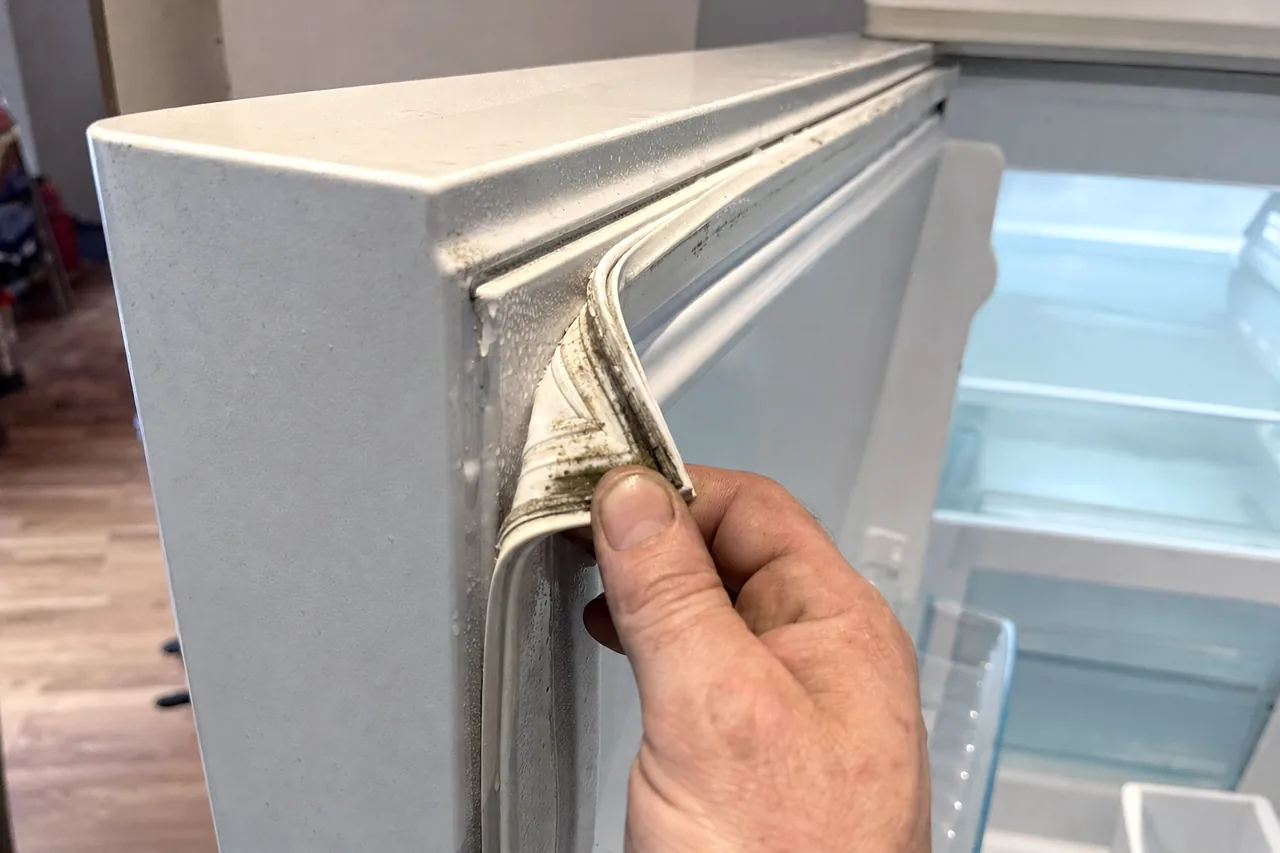
Before you spend money on a refrigerator that has gone warm, spend five minutes on the door. It is the cheapest diagnostic available to a homeowner and it resolves a surprising share of complaints that arrive sounding mechanical.
Take an ordinary sheet of paper, close the door on it so half is inside, and pull. You should feel real resistance — enough that the paper drags or tears rather than slides. Repeat every six inches or so around the entire perimeter, including the corners and the top edge, which is where seals fail first.
Where the paper slides out freely, the gasket is not making contact at that point. That is your leak, and you have just located it without tools.
Two refinements. Do the test on a door that has been closed for an hour, not one you have just been holding open, because a warm gasket behaves differently from a cold one. And run your finger along the seal while you are there: a healthy gasket is soft and springs back when you press it, and one that has failed feels hard, glossy in patches, or stays dented after you take your finger away.
A door gasket is a magnet inside a flexible profile. It seals by being compressed, and it survives by recovering between compressions. Held in the same compressed shape for ten or fifteen years, through every summer this climate produces, the material stops recovering. The magnet still pulls the door in, so the door still feels shut, but there is no longer continuous contact.
This is why owners so rarely spot it. Nothing looks wrong. The door closes with a satisfying pull. The appliance simply runs more and holds less.
In a dry climate a leaking seal costs you efficiency. In Clay County it costs you efficiency and produces ice.
Warm air carries a great deal of moisture in this county for most of the year. When it enters a freezer through a gap in the seal, the moisture condenses on the first cold surface it reaches and freezes there. That is the honest explanation for the single most misdiagnosed symptom in refrigeration: frost that keeps coming back on the back wall of the freezer after somebody has already defrosted it.
It gets blamed on the defrost system. Sometimes that is right. But if the frost returns within a week or two of a manual defrost, and the paper test fails at the top of the door, the door is the story.
In the fresh food compartment the same leak shows differently. The unit runs more or less constantly, the top shelf never feels properly cold, and water appears under the crisper drawers when the accumulated condensate finally melts.
Houses on Doctors Lake and along the river see this soonest, because the room around the appliance is more humid to begin with and screened porches stand open for most of the year.
A seal that fails along the whole top edge is often not a gasket problem at all. It is a door that has dropped. Built-in and integrated doors carry heavy custom panels, and hinges and closers go out of adjustment slowly. The first complaint is usually that the door no longer pulls itself shut over the last inch. Owners adapt by pushing it, then forget to, and the frost follows.
Replacing a gasket on a door that is out of alignment produces a new gasket that will take a set in the same place. The alignment has to be corrected first, and that means getting the panel flush with the cabinetry, the reveal even top to bottom, and the seal in contact all the way round — three goals that pull against each other and take patience.
If the paper test fails in one small spot, sometimes a gasket that has been cleaned and warmed will recover enough to matter. If it fails along a whole edge, or the door has to be pushed to latch, or frost has already returned once after a defrost, that is a service call.
Gaskets and hinge hardware are ordinary genuine OEM parts, and this is one of the least expensive repairs a built-in refrigerator ever needs. It is also the one most often skipped on the way to blaming something far more costly.
The bands below are the ones this note is about. They are completed repairs, parts and labour together, on top of a flat diagnostic visit that is credited toward the work.
| Work | Typical range |
|---|---|
| $80 diagnostic visit | $80 |
| Door gasket or seal replacement | $250–$650 |
| Defrost heater, thermostat or sensor | $260–$630 |
Ranges, not quotes: the firm figure is written down after the diagnosis and nothing is ordered or billed until you have approved it. On this page the work we describe runs from $80 for the visit to about $650 at the top of the band above. The whole book of bands is on the pricing page.
A flat $80 covers the visit and the diagnosis. It is credited toward the repair if you go ahead with the work.
4.3 out of 5 across 62 customer reviews. Read every one of them.
The seal had gone hard along the top and the cabinet face was damp every afternoon. New gasket, hinge shimmed, closer reset, and the paper test held everywhere he tried it before he packed up.
Verity N.2026-08-08
Frost kept returning on the freezer wall within days of my clearing it. He showed me the seal letting go along one whole side with a sheet of paper, which was difficult to argue with.
Jasper L.2026-09-07
The custom panel had dropped enough that the door caught on closing. He shimmed the hinge, reset the cam and levelled the panel so the reveal matches the cabinetry either side of it again.
Gideon R.2025-10-19